 Skip to content




Description
Glaucous Macaw Parrots
The Glaucous Macaw (Anodorhynchus glaucus) is one of the most mysterious and historically significant members of the macaw family. Unlike the other species described on this page, it is considered possibly extinct, with no confirmed living population in recent decades. Its story is closely connected to the disappearance of specialised South American habitats and the broader challenges facing rare parrot species.
Historically, the Glaucous Macaw was native to parts of South America, particularly regions around Argentina, Paraguay, Brazil and Uruguay. It was associated with areas containing yatay and other native palm trees, which provided important feeding resources. Its natural habitat included palm-rich woodland and riverine landscapes.
Early natural history records and illustrations provide much of the information available about this bird. As its habitat was gradually transformed through agricultural expansion, the species became increasingly difficult to observe. Historical reports suggest that it experienced a substantial decline during the nineteenth and twentieth centuries.
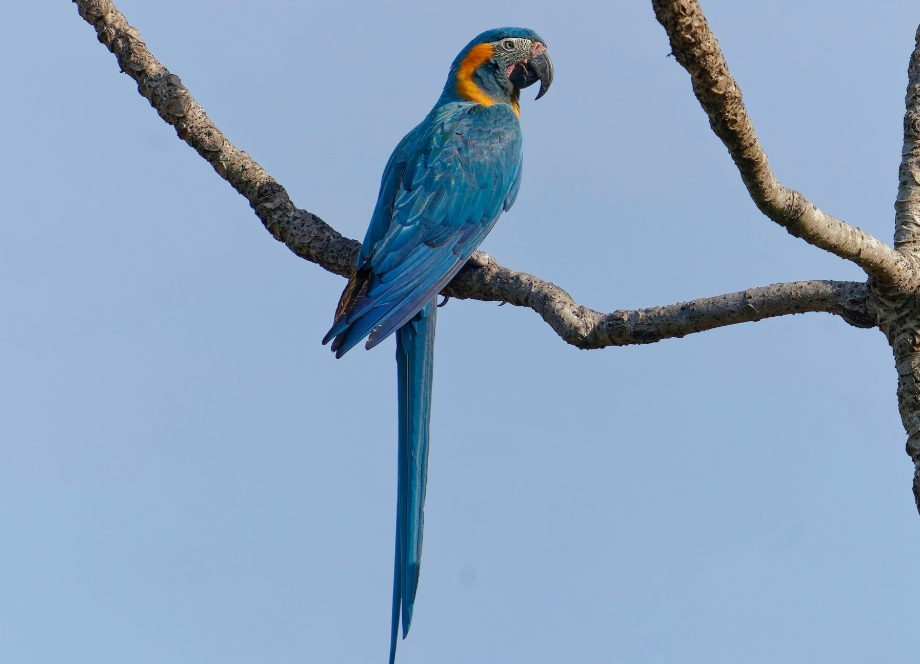
The Glaucous Macaw was a large, elegant bird with pale bluish-grey or turquoise-toned plumage. Its head and body displayed subtle blue-green shades, while yellowish facial markings appeared around the lower beak and eye region. Its long tail and strong hooked beak were characteristic of the macaw family.
The species is particularly important to conservation researchers because its possible extinction highlights the dangers of habitat destruction and the loss of specialised food sources. Its story also demonstrates why monitoring rare wildlife populations and protecting natural ecosystems are essential.



Reviews
There are no reviews yet.